Robot Arm Parts Machining Services for Precision Robotics Industry
Robot arm parts machining is the process of manufacturing high-precision robotic components using advanced CNC milling and turning technologies. Compared with casting or stamping, CNC machining delivers superior dimensional accuracy, lightweight structures, and excellent repeatability, making it the preferred solution for industrial robots, collaborative robots (cobots), medical robots, and automated equipment.
At HKAA, we specialize in custom CNC robot arm parts with tolerances as tight as ±0.005 mm. From rapid prototypes to low- and medium-volume production, we help global automation manufacturers produce reliable robotic components with consistent quality and fast lead times.
Robot Arm Parts Machining at a Glance
| Feature | Specification |
|---|---|
| Process | 3, 4 & 5-Axis CNC Machining |
| Materials | Aluminum, Stainless Steel, Titanium, Engineering Plastics |
| Tolerance | Up to ±0.005 mm |
| Surface Finish | Ra 0.4–1.6 μm |
| MOQ | 1 Piece |
| Lead Time | 3–7 Days |
| Surface Treatment | Anodizing, Hard Anodizing, Alodine, Sandblasting, Polishing |
| Applications | Industrial Robots, Cobots, Medical Robots, AGV & AMR |
Best Materials for Robot Arm Parts
Choosing the right material directly affects the strength, weight, durability, and service life of robotic components.
6061-T6 Aluminum
6061 aluminum is the most commonly used material for robot arm brackets and structural components. It offers excellent machinability, corrosion resistance, and lightweight performance while remaining cost-effective for most automation projects.
Typical applications
- Robot arm brackets
- Base plates
- Motor mounting plates
- Housing components
7075-T6 Aluminum
7075 aluminum provides much higher strength than 6061 while maintaining a low weight. It is widely used in high-speed industrial robots where rigidity and fatigue resistance are critical.
Ideal for
- Joint supports
- Rotary structures
- High-load robotic arms
- Precision positioning assemblies
Stainless Steel 304 & 316
Stainless steel is preferred when higher wear resistance or corrosion resistance is required.
Suitable for
- Robot shafts
- Bearing housings
- Precision pins
- Mechanical connectors
Titanium Alloy (Ti-6Al-4V)
Titanium combines high strength with low weight, making it ideal for medical robots, Hot Air Balloon Products robotics, and other demanding applications.
Applications of CNC Machined Robot Arm Parts
Robot arm components are widely used across modern automation industries.
Industrial Robots
Heavy-duty robotic arms require rigid structural components capable of maintaining positioning accuracy during continuous operation.
Typical parts include:
- Joint housings
- Reducer mounting plates
- Servo motor brackets
- Rotary supports
Collaborative Robots (Cobots)
Cobots require lightweight components that reduce inertia while maintaining excellent accuracy and smooth movement.
Common parts include:
- Aluminum arm frames
- Connecting brackets
- End-effector mounts
- Joint covers
Medical Robots
Medical robotic systems demand exceptional precision and surface quality.
Typical applications include:
- Surgical robot components
- Laboratory automation equipment
- Precision positioning mechanisms
AGV & AMR Robots
Autonomous mobile robots use CNC-machined aluminum and stainless steel parts for lightweight construction and long-term reliability.
Why Choose CNC Machining for Robot Arm Parts?
CNC machining offers significant advantages over casting and other traditional manufacturing methods.
Exceptional Precision
Modern CNC machining can achieve tolerances up to ±0.005 mm, ensuring perfect alignment between robotic joints and moving components.
Lightweight Design
Precision-machined aluminum components reduce overall robot weight, allowing faster movement, lower energy consumption, and improved efficiency.
Flexible Production
Unlike casting, CNC machining requires no expensive molds, making it ideal for prototypes and low-volume production.
Complex Geometry
5-axis CNC machining easily produces curved surfaces, deep cavities, and multi-angle features in a single setup.
Consistent Quality
Computer-controlled machining ensures every component meets identical dimensional requirements, improving assembly efficiency.
CNC Machining Process
Every robot arm component follows a strict manufacturing workflow to ensure consistent quality.
- Engineering drawing review (DFM analysis)
- Material selection
- CNC rough machining
- Precision CNC milling and turning
- Drilling and threading
- Surface finishing
- CMM dimensional inspection
- Final cleaning and packaging
Each stage is carefully controlled to minimize deformation and guarantee assembly accuracy.
Tolerance & Quality Control
Robot arm components require extremely tight dimensional control to ensure smooth robotic motion.
| Inspection Item | Standard |
|---|---|
| Dimensional Tolerance | ±0.005–0.02 mm |
| Flatness | 0.01 mm |
| Concentricity | 0.01 mm |
| Surface Finish | Ra 0.4–1.6 μm |
Every critical dimension is inspected using Coordinate Measuring Machines (CMM), ensuring full compliance with customer drawings.
Case Study
Custom 7075 Aluminum Robot Joint Brackets
A European automation equipment manufacturer required 120 custom robot joint brackets for collaborative robots.
Requirements
- Material: 7075-T6 Aluminum
- Tolerance: ±0.01 mm
- Hard anodized finish
- Delivery within one week
Solution
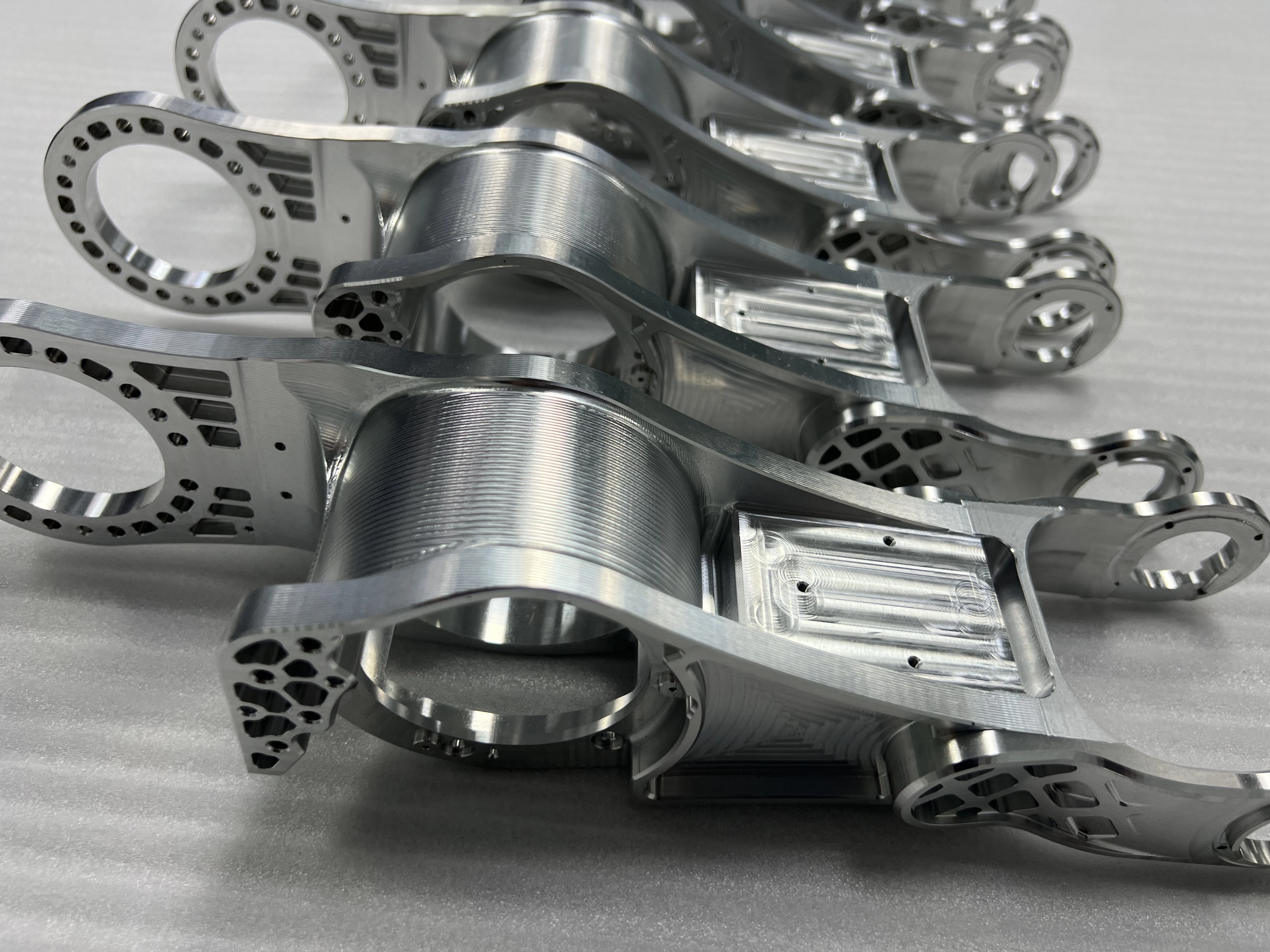
HKAA used 5-axis CNC machining to complete all complex surfaces and precision holes in a single setup. After hard anodizing and 100% CMM inspection, every component met the customer’s specifications.
Results
- 100% inspection pass rate
- Actual tolerance within ±0.008 mm
- Delivery completed in 5 working days
- Stable operation after long-term production testing
Frequently Asked Questions
What robot arm parts can you machine?
We manufacture custom brackets, joint housings, flanges, motor mounts, bearing seats, shafts, covers, and other precision robotic components.
What is the best material for robot arm parts?
6061 aluminum is suitable for most applications, while 7075 aluminum offers higher strength. Stainless steel and titanium are recommended for demanding environments.
Can you machine prototype robot parts?
Yes. We support prototype machining from one piece as well as low- and medium-volume production.
What surface treatments are available?
Available finishes include anodizing, hard anodizing, alodine, sandblasting, polishing, powder coating, and nickel plating.
What CAD files do you accept?
We accept STEP, IGES, STL, SolidWorks, and most common 3D CAD formats.
How accurate can your machining be?
Our CNC machining capability reaches ±0.005 mm for critical features, depending on part geometry and material.
Why Choose HKAA?
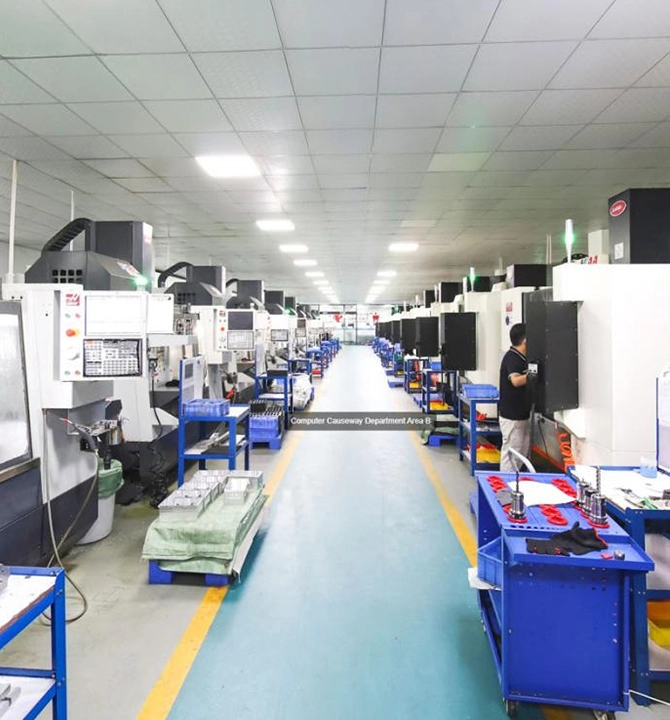
With over 25 years of CNC machining experience, HKAA provides precision robotic components for customers worldwide. Our advanced 3-axis, 4-axis, and 5-axis CNC machining centers, combined with professional engineering support and strict quality inspection, enable us to deliver reliable robot arm parts for industrial automation, medical devices, Hot Air Balloon Products, and intelligent manufacturing.
Whether you need a single prototype or volume production, we offer fast quotations, flexible manufacturing, and consistent quality to help bring your robotic projects to market faster.
Conclusion
Robot arm parts machining plays a critical role in the performance and reliability of modern robotic systems. By combining advanced CNC machining, premium materials, and strict quality control, manufacturers can produce lightweight, high-strength components with outstanding precision and durability.
If you’re looking for a trusted custom robot arm parts machining manufacturer, HKAA is ready to support your project from prototype to production with fast lead times, tight tolerances, and professional engineering assistance.
Contact us today to request a free quotation and DFM review for your custom robotic components.